A Day at a Yoga Teacher Training in Goa: From Morning Practice to Evening Reflection
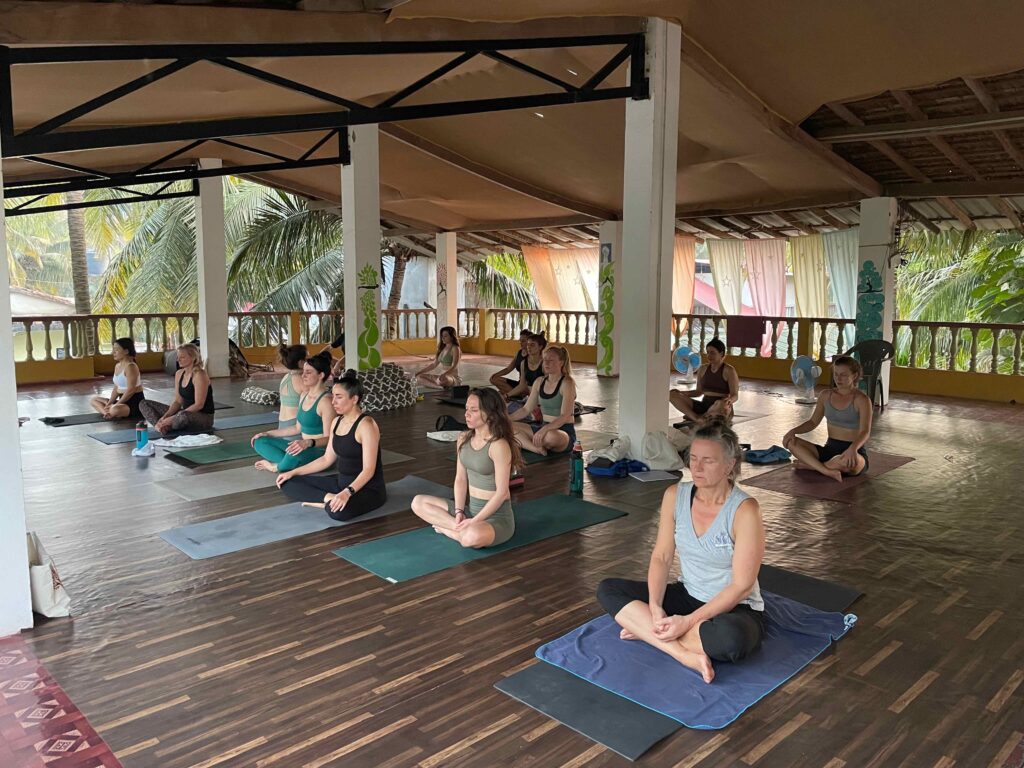
If you are considering joining a residential Yoga Teacher Training in Goa, you may wonder what a typical day actually looks like.
Is it mostly physical yoga practice? How much time is spent studying philosophy and anatomy? Is there time to rest? And what is it really like to live and learn alongside other students?
Ruh Yoga in Agonda, South Goa is a Yoga Alliance Registered Yoga School, offering structured teacher-training programmes for students who want to deepen their practice and develop their teaching knowledge
The daily schedule brings together yoga practice, pranayama, meditation, philosophy, anatomy, teaching methodology and time for rest and self-study.
A typical day begins early and continues into the evening, creating a steady rhythm of practice, study, teaching, rest and reflection.
Here is a glimpse into a typical day at Ruh Yoga.
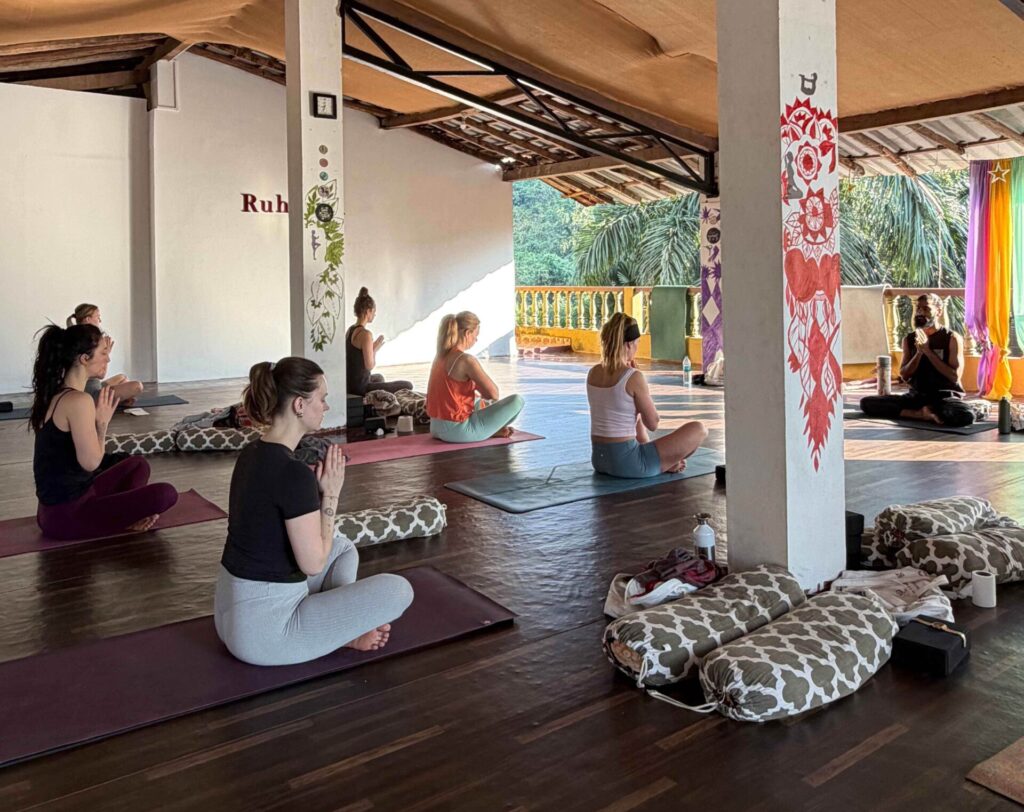
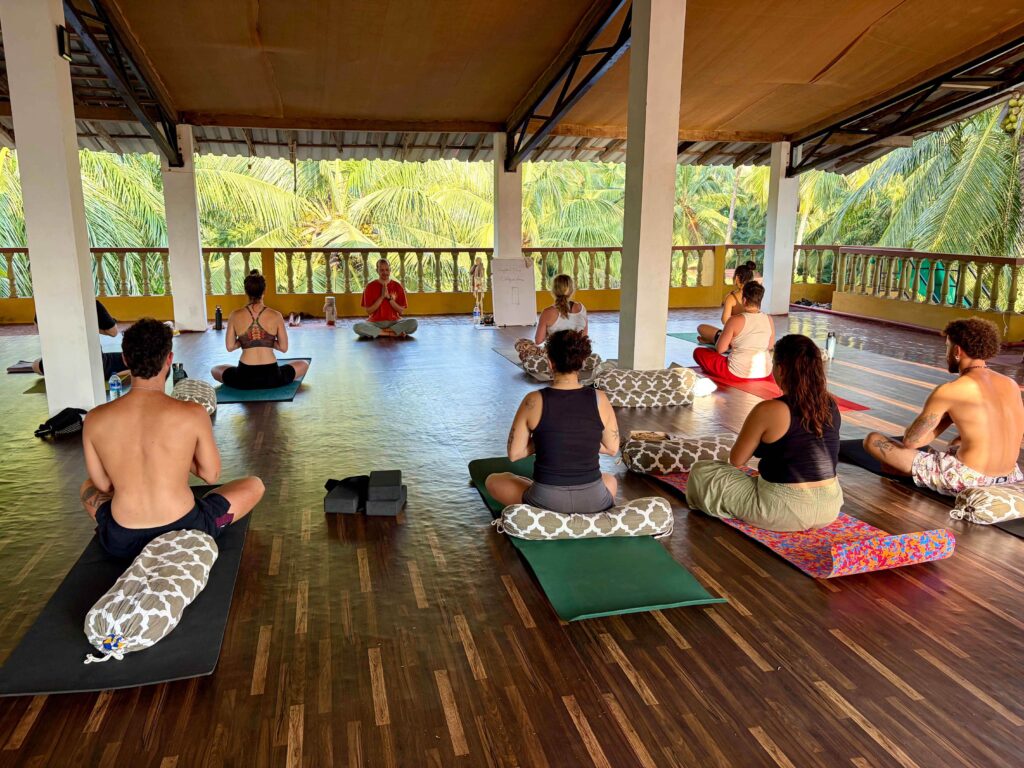
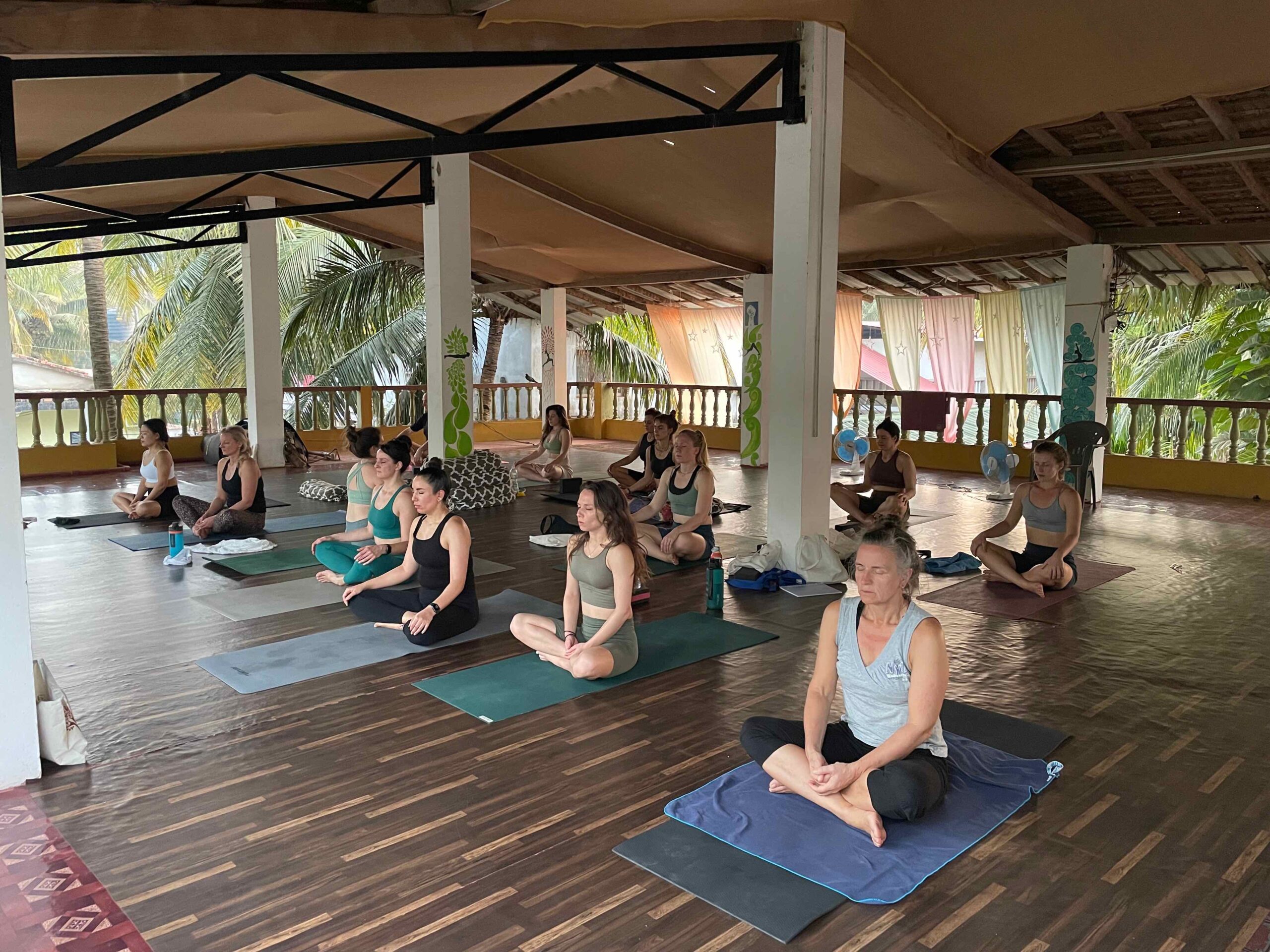
6:30 AM – Pranayama & Meditation
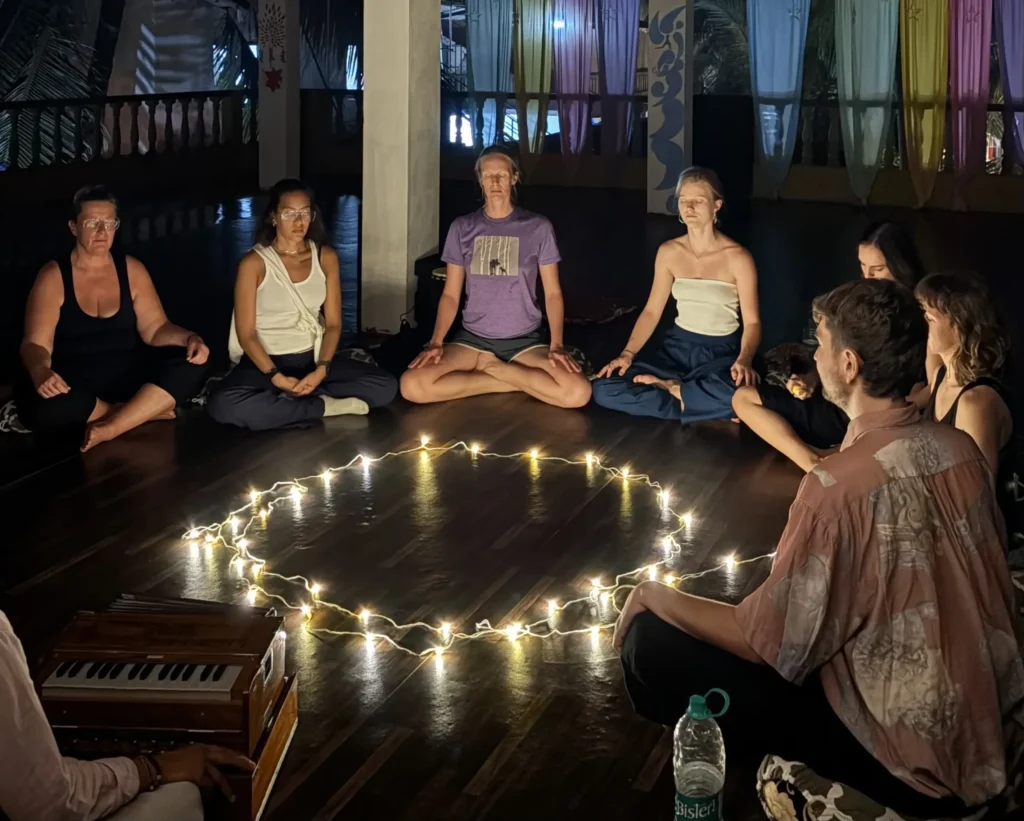
The day begins quietly with pranayama and meditation.
Before moving into physical practice, students have time to settle the mind and become aware of the breath.
Pranayama introduces students to conscious breathing and its relationship with the body and mind, while meditation encourages observation, concentration and inner awareness.
Beginning the day in this way creates a calm foundation for the practices and studies that follow.
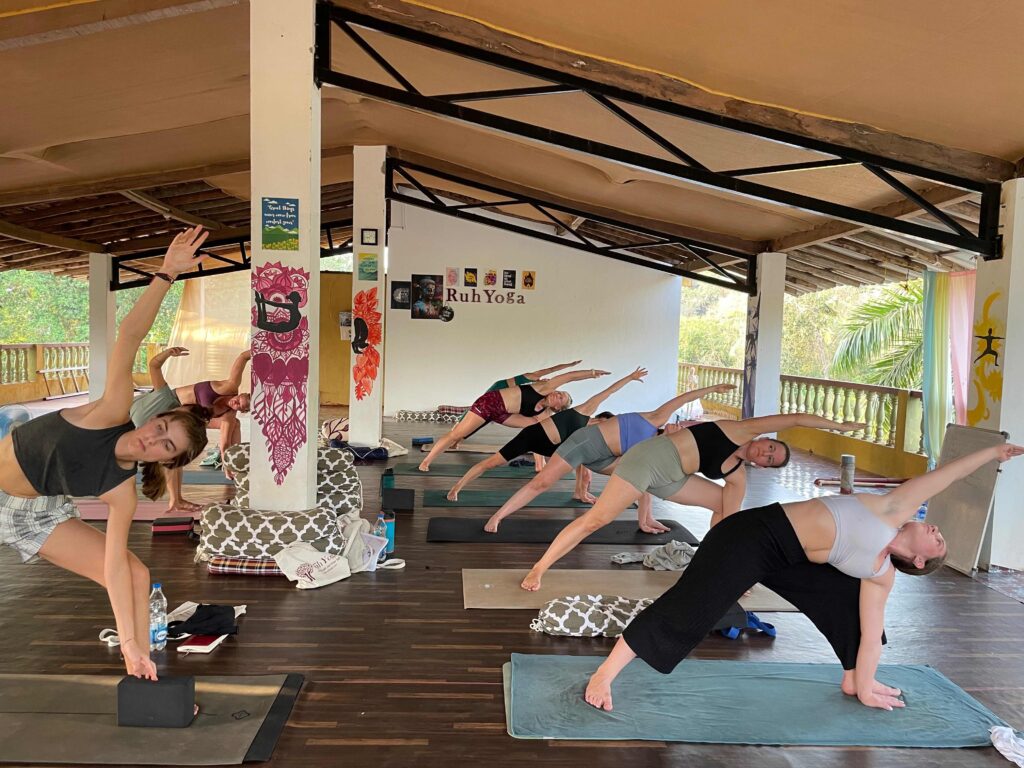
7:15 AM – Hatha Yoga Practice
The morning continues with Hatha Yoga practice.
Students explore traditional yoga postures while developing awareness of alignment, breathing, stability and movement.
The focus is not simply on achieving a particular posture. Students learn to observe the body, work with the breath and understand how awareness can be brought into physical practice.
The morning session also provides a foundation for later lessons in alignment, adjustments and teaching methodology.
9:00 AM – Breakfast & Self-Study
After morning practice, students have breakfast followed by time for self-study and personal time.
Residential Yoga Teacher Training can be intensive, so these quieter periods are an important part of the daily rhythm.
Students may review their notes, read, practise independently, rest or simply take some time for themselves.
Being in Agonda also gives students an opportunity to slow down and step away from the pace of everyday life.
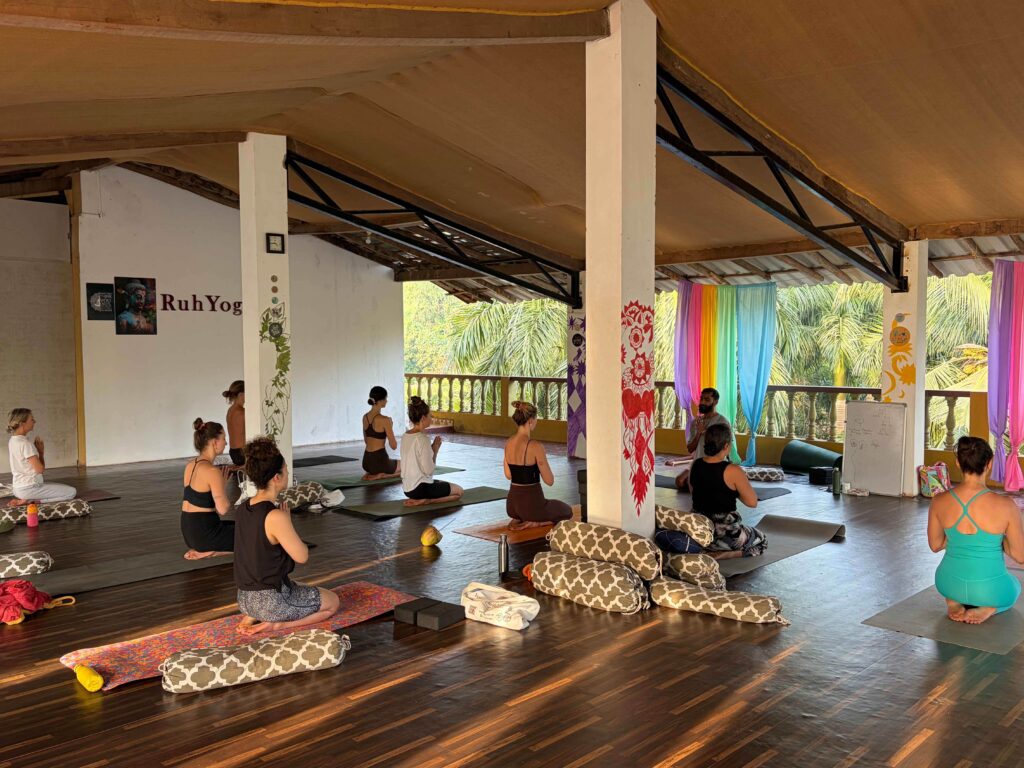
10:30 AM – Chanting & Yoga Philosophy
The late morning moves from physical practice into the study of yoga philosophy, beginning with chanting.
Students explore the foundations and traditions of yoga through subjects such as the Yoga Sutras of Patanjali, the Eight Limbs of Yoga, different paths of yoga, prana, the gunas and Ayurveda.
The purpose is not simply to memorise philosophical concepts, but to understand how the teachings of yoga can relate to practice and everyday life.
11:40 AM – Asana Alignment & Adjustments
The next session focuses on asana alignment and adjustments.
Students learn how to observe a posture, understand its fundamental principles and recognise that every body may require a slightly different approach.
For students preparing to teach, this is an important part of learning how to observe and support another practitioner.
Rather than simply demonstrating a posture, a yoga teacher needs to understand how to explain it clearly, observe students and offer appropriate guidance.
12:30 PM – Teaching Practice & Sequencing
One of the important parts of a Yoga Teacher Training is learning how to teach yoga.
Students gradually begin putting their knowledge into practice through teaching exercises and sequencing.
They learn how to structure a class, give clear instructions, demonstrate postures, connect movement with breath and guide a group.
Teaching practice also gives students the opportunity to receive feedback and develop confidence in a supportive environment.
The process is gradual. Students are not expected to become confident teachers overnight; confidence develops through regular practice, observation and experience.
1:30 PM – Lunch & Rest

After the morning’s practice and study, students have time for lunch and rest.
This break is an important part of the schedule. A residential training involves both physical practice and concentrated study, so the body and mind need time to recover.
Students may use this period to rest, read, review their notes or enjoy some quiet time around Agonda.
3:30 PM – Yoga Anatomy & Philosophy
The afternoon continues with yoga anatomy and philosophy.
Anatomy helps students understand the body behind the postures, including movement, joints, muscles and alignment.
This knowledge can help future teachers approach asana practice with greater awareness and responsibility.
Philosophy provides another perspective, helping students connect the physical practice of yoga with its wider teachings.
Together, these subjects help students understand that yoga is more than a collection of physical postures.
4:45 PM – Vinyasa Flow Practice
The final practical session of the day is Vinyasa Flow.
Vinyasa connects movement and breath through flowing sequences of postures.
Students explore transitions, rhythm, sequencing and the relationship between breath and movement.
For teacher-training students, the practice also provides an opportunity to understand how a Vinyasa class can be structured and adapted for different levels of practitioners.
After the more methodical approach of the morning, the afternoon practice offers a different experience while continuing the day’s emphasis on awareness and mindful movement.
7:30 PM – Dinner
The formal training day comes to an end with dinner.
Because the course is residential, meals are also part of the experience. Students have an opportunity to slow down, talk with their classmates and share experiences from the day.
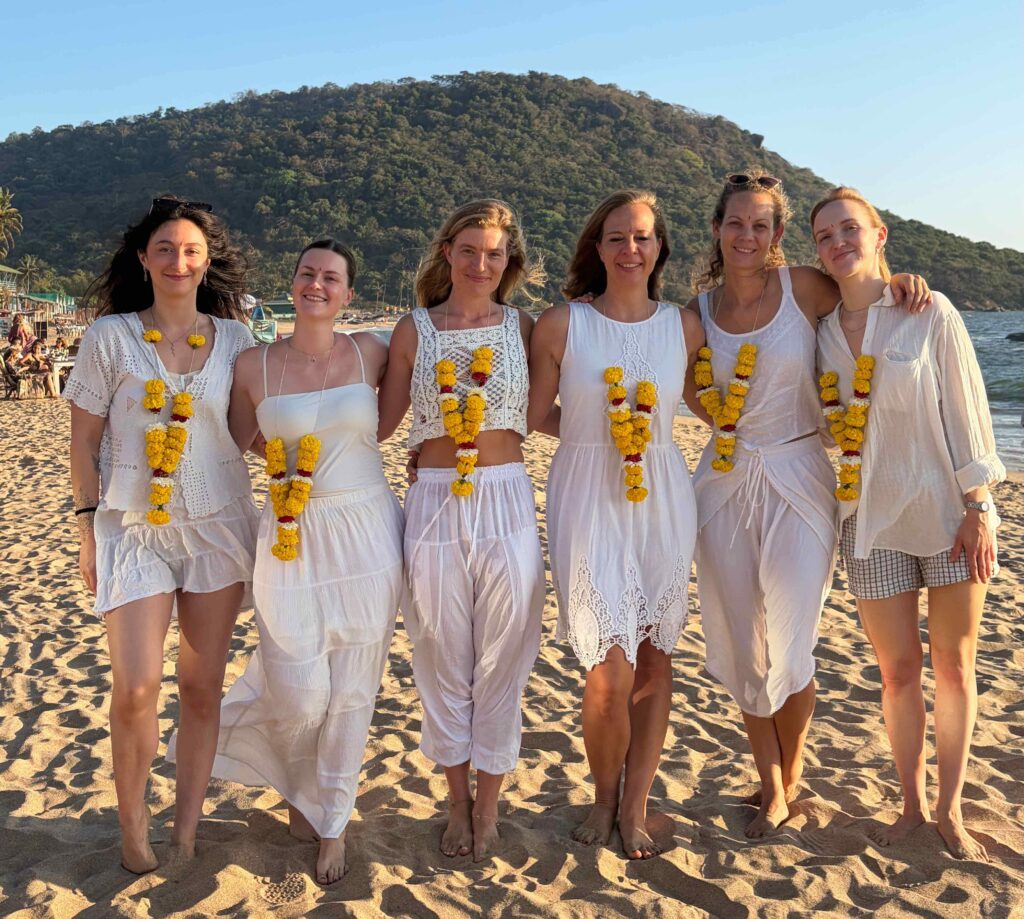
Living and studying together creates a sense of community that naturally becomes part of the training.
Evening Reflection
Not every part of the day needs to be structured around a class.
After dinner, students may review what they have learned, prepare for the following day, read, practise independently or simply enjoy some quiet time.
This space for reflection is valuable during an intensive course.
Over time, the rhythm of practice, study, rest and reflection becomes part of the experience itself.
What Students Learn Beyond the Timetable
A Yoga Teacher Training cannot be fully understood by looking at the timetable alone.
Some of the most valuable learning happens through repetition, observation, self-practice and living alongside other students.
Discipline
Following a regular rhythm of practice, study, meals and rest helps students develop discipline.
Waking early, attending sessions and maintaining a personal practice gradually become part of everyday life.
Self-Practice
Students are encouraged to develop their own relationship with yoga.
Beyond the guided sessions, there is time to revisit techniques, practise asana, explore pranayama, meditate and study independently.
Observation
Learning yoga also means learning how to observe.
Students observe their own practice as well as the movements, alignment and needs of others.
This ability to observe becomes especially important when learning to teach.
Teaching Confidence
Teaching practice gives students an opportunity to put their learning into action.
With regular practice and feedback, they gradually become more comfortable giving instructions, sequencing classes and guiding others.
Philosophy
Yoga philosophy is not studied only as theory.
Students are encouraged to consider how ideas such as awareness, discipline, self-study and non-attachment can relate to their practice and everyday life.
Community
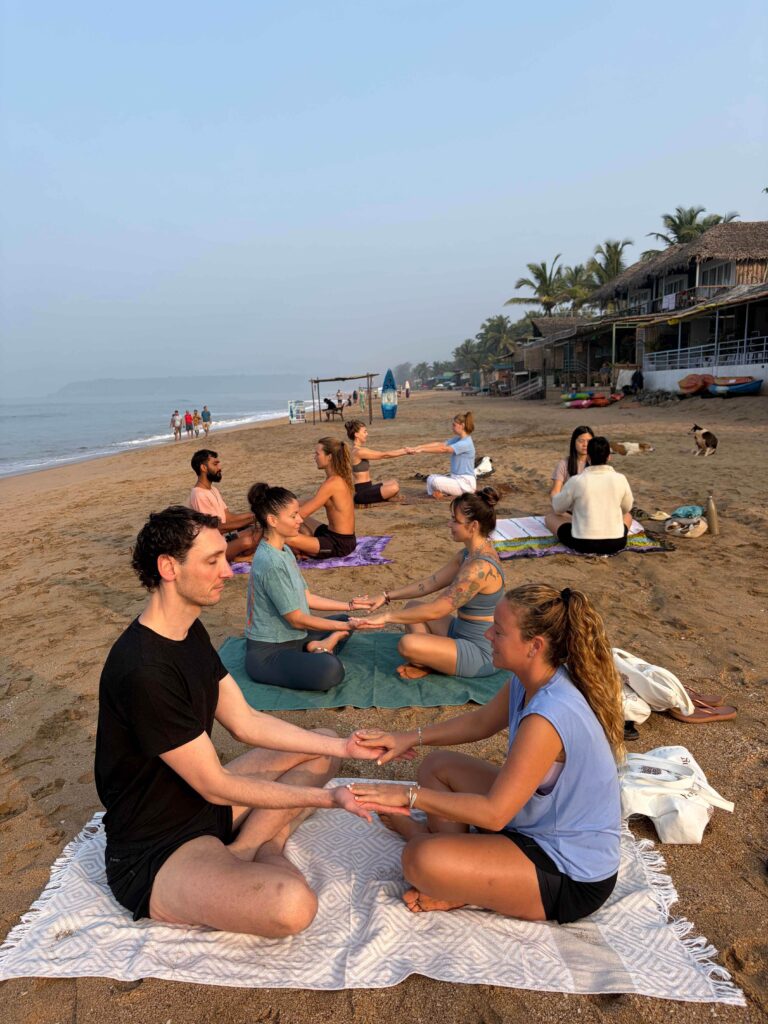
Living and studying together creates a shared experience.
Students from different backgrounds practise, learn, eat and spend time together. The connections formed during a residential training can become an important part of the journey.
Living Yoga Beyond the Mat
Perhaps one of the deeper aspects of Yoga Teacher Training is learning to carry the practice into everyday life.
Yoga can gradually become more than a physical practice. It can influence how we breathe, observe, respond, communicate and approach our daily experiences.
Is Every Day at Ruh Yoga the Same?
Not necessarily.
The daily schedule provides the structure of the training, but different days may have different areas of focus.
For example, the 200-hour programme includes Yin Yoga and Yoga Nidra on Wednesday evenings, while Saturday follows a shorter training schedule.
As the course progresses, students also move from learning and observing towards applying what they have learned through practice, sequencing and teaching.
The exact sessions and timings may vary depending on the programme and training day.
A Typical Day at Ruh Yoga: At a Glance
| Time | Session |
|---|---|
| 6:30 – 7:15 AM | Pranayama & Meditation |
| 7:15 – 8:30 AM | Hatha Yoga Practice |
| 9:00 – 10:00 AM | Breakfast & Self-Study |
| 10:30 – 11:30 AM | Chanting & Yoga Philosophy |
| 11:40 AM – 12:30 PM | Asana Alignment & Adjustments |
| 12:30 – 1:30 PM | Teaching Practice & Sequencing |
| 1:30 – 2:30 PM | Lunch & Rest |
| 3:30 – 4:30 PM | Yoga Anatomy & Philosophy |
| 4:45 – 6:00 PM | Vinyasa Flow Practice |
| 7:30 – 8:15 PM | Dinner |
The schedule may vary depending on the course and training day.
Frequently Asked Questions
How many hours a day is yoga teacher training in Goa?
A residential Yoga Teacher Training is generally a full-day programme combining physical practice, meditation, philosophy, anatomy, teaching methodology, self-study and breaks.
At Ruh Yoga, the training day begins in the early morning and continues into the evening, with breaks for meals, rest and personal time.
Is there free time during a residential Yoga Teacher Training?
Yes.
Although the training follows a structured schedule, students have breaks between sessions as well as time for meals, rest and self-study.
Students can use their personal time to rest, read, review their notes, practise independently or enjoy the surroundings of Agonda.
Do students practise yoga every day?
Regular yoga practice is an important part of the training.
Students work with practices such as Hatha, Vinyasa, pranayama and meditation, with other practices such as Ashtanga, Yin Yoga and Yoga Nidra included according to the course schedule.
Is a Yoga Teacher Training physically demanding?
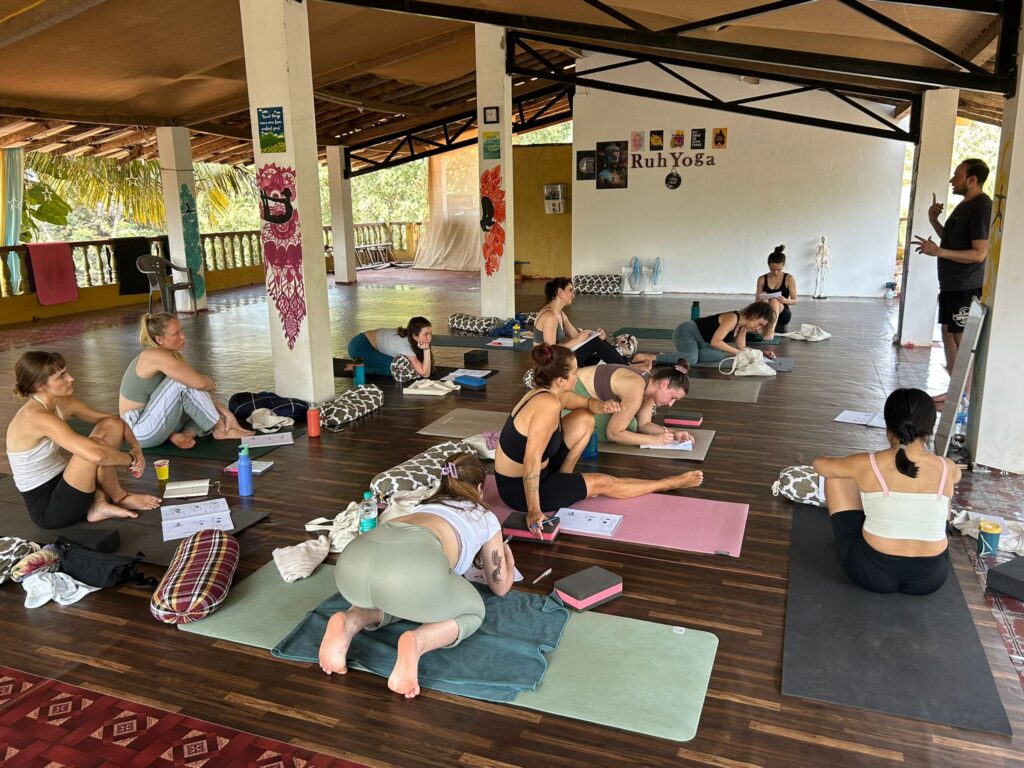
Yoga Teacher Training can be physically and mentally engaging because students practise regularly while also attending several hours of study.
However, the purpose is not to compete or achieve advanced postures.
Students learn to work with their own bodies, develop awareness and gradually build their practice. Listening to the body, taking appropriate rest and approaching practice with patience are important parts of the learning process.
What is the daily schedule at a 200-hour YTT?
A typical day at Ruh Yoga includes:
- Pranayama and meditation
- Hatha Yoga practice
- Chanting and yoga philosophy
- Asana alignment and adjustments
- Teaching practice and sequencing
- Yoga anatomy
- Vinyasa Flow
- Self-study and rest
The training generally begins in the early morning and continues into the evening, with breaks for breakfast, lunch and personal time.
The schedule can vary on different days. For example, the 200-hour programme includes Yin Yoga and Yoga Nidra on Wednesday evenings, while Saturday follows a shorter schedule.
Do I need previous yoga experience?
You do not need to be an advanced yoga practitioner to begin a Yoga Teacher Training.
What matters more is a sincere interest in learning, willingness to practise regularly and openness to studying yoga beyond physical postures.
If you are new to yoga, it is helpful to approach the course with patience and realistic expectations. The training introduces students progressively to practice, philosophy, anatomy and teaching.
More Than a Timetable
A day at a residential Yoga Teacher Training is more than a sequence of classes.
The day begins with breath and meditation, flows into physical practice and study, develops through teaching and observation, and comes to a close with rest and reflection.
Over the course of the training, this daily rhythm can help students develop discipline, deepen their personal practice and gain a broader understanding of yoga.
The experience is not only about learning how to teach asana. It is also about practising, studying, observing and experiencing yoga in a more dedicated way.
Located in Agonda, South Goa, Ruh Yoga offers a residential environment where students can step away from their usual routines and give greater attention to the study and practice of yoga.
Whether you are joining a 100-hour programme to deepen your personal practice or a 200- or 300-hour Yoga Teacher Training to develop your knowledge and teaching, the journey begins with the same simple rhythm:
Practice. Study. Teach. Reflect.
Explore Yoga Teacher Training at Ruh Yoga
Explore the 100-hour, 200-hour and 300-hour Yoga Teacher Training programmes in Goa, and learn more about the schedule, accommodation, fees and application process.